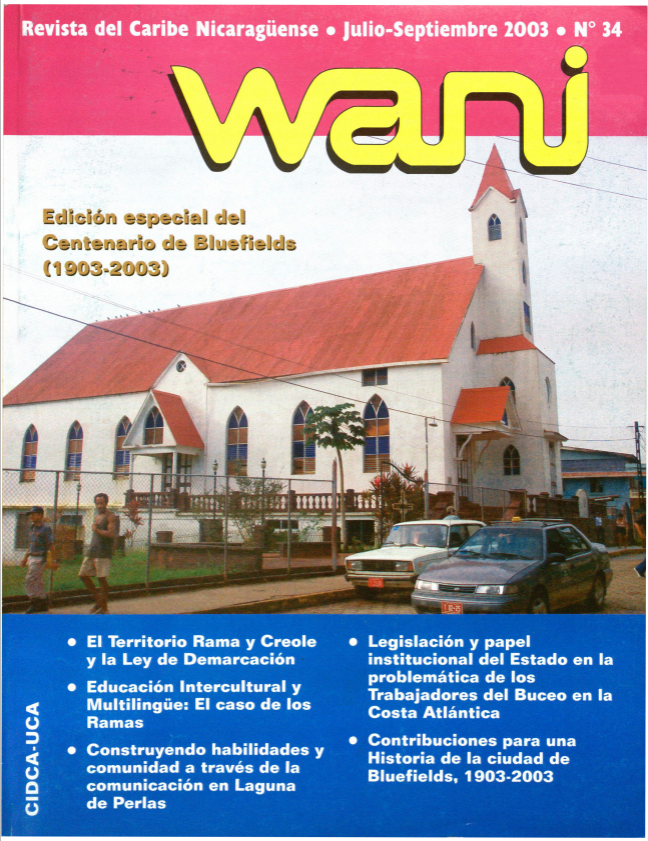
Intercultural and multilingual education: the case of the Ramas
Keywords:
Culture, Ethnic group, History, Indigenous people's land, Intercultural education, Language, RamaAbstract
Among the ethnic groups of the Atlantic Coast recognized by the Autonomy Law, the Rama community seems to hold the distinction of both being the least known and the most mythologized. Despite the number of documents that have been compiled, from colonial sources to 19th century travelers' notes and 20th century anthropological and linguistic studies, information accumulated on this ethnic group does not seem to be widespread. Nor does it seem easy to alter the image outsiders have of the Rama community. Partly because of the latter, this author of this article attempts to update this image through a description of their current intercultural and bilingual program and the way this program reflects the community’s characteristics. The information that is presented in this article comes from a bread Rama language project, which started in conjunction with the autonomy project in the 1980s and continues to this date.
Downloads