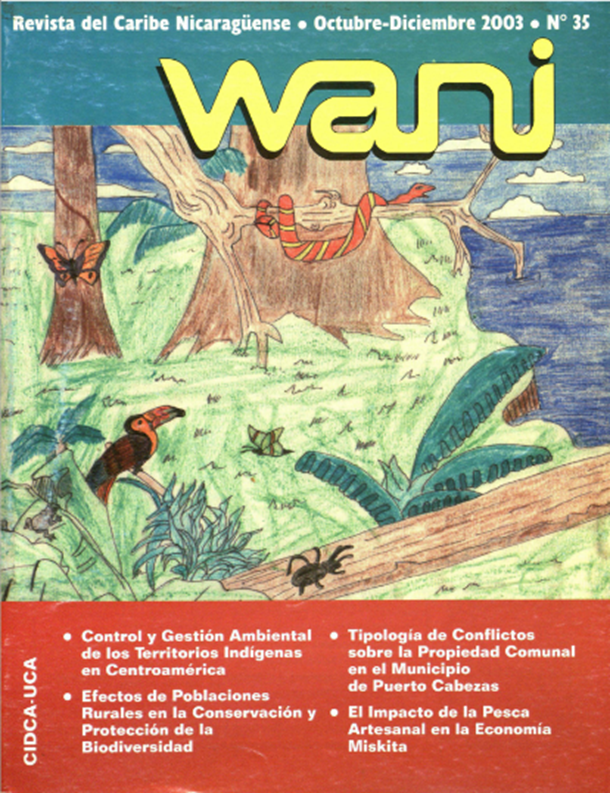
Control and environmental management of indigenous territories in Central America
Keywords:
Autonomous regions, Community, Cultural diversity, Indigenous peoples' territory, Population distribution, distributionTerritoryAbstract
The strengthening of sustainable human development in the specific environmental, cultural and social conditions of a region such as Central America requires a serious reflection on lessons learned from concrete projects, especially in the most vulnerable areas. These areas combine an elevated environmental risk, high levels of rural poverty and population increases out of the control of public policies. This situation prevails on the agrarian frontier in the tropical humid area of all Central American countries, where environmental destruction is the result of the very same processes that generate wealth concentration and at the other extreme, social exclusion and marginalization of vulnerable groups and poverty. In this article, the author analyzes how resources are handled in the framework of sustainable human development and identifies its main actors in Central America.
Downloads